
Names
Rändrahnu (Rändrahn)
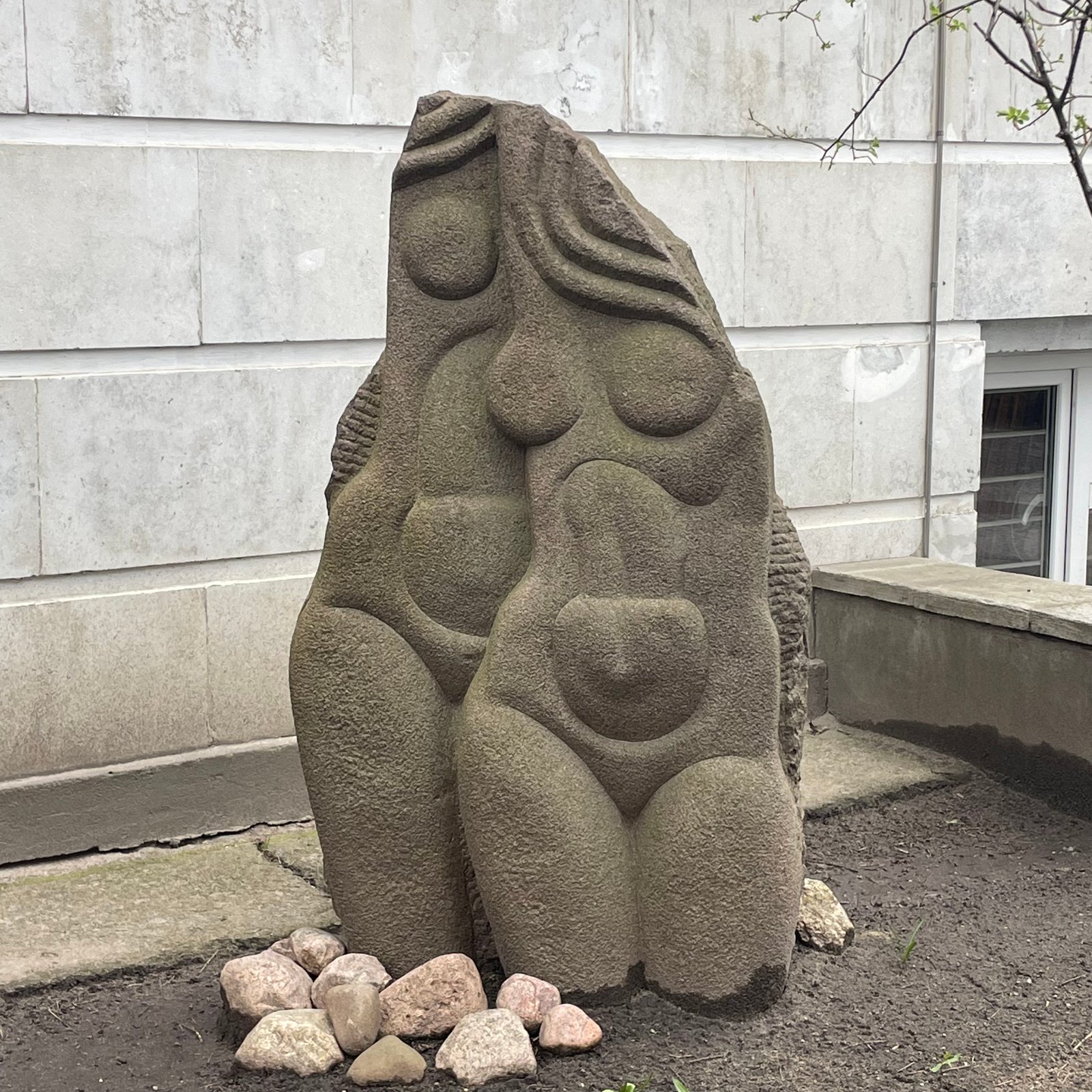
Erratic boulder, aka glacial erratic, aka erratic, and known by various names in Estonian too: hiidrahn (giant rock), rändkivi (shorestone, beachstone), suurkivi (big stone), etc. Street named after the numerous erratics on the Pirita shoreline. The largest erratic boulder in Estonia is the Ehalkivi (twilight rock, see Eha) in the sea at Letipea (///scenes.milling.escapes). It has a volume of 930 m3 and weighs 2500 tonnes, but it’s in the water so easier to lift. Said to owe its name to its size concealing the setting sun. The German name for these boulders is Findling (foundling – understandable). For other erratic-themed locations, see Suurekivi.
Ränduri (Rändur)
Given its position alongside the railway: traveler or wayfarer but, for those who don’t buy tickets: vagabond or vagrant. Pilgrims would just use the track as route indicator... Renaming, along with Liikuri, of former Raudtee. The original choice was Relsi, from Relss, a colloquial term for rail, roundly rejected by rancorous railway riparians.
Randvere (Randvere)
Road leading to village of that name, first recorded (1397) as Randyver, and inhabited by Swedish immigrants from 13th C on. Rand, here, presumably straight from Swedish for ‘shore’ or ‘beach’ (see Ranna) and although the ‑vere part may well look etymologically Estonian (see Aedvere), it may equaly be a loan from Swedish över, above (cognate with Old Norse yfir, modern English over (but also old English ofer, border or edge, hinting at a fortuitous association between King Offa and ‘his’ eponymous dyke) and German Ufer, bank, shore, better reflected in the origin of Hanover, formerly Honovere, from Hohes Ufer / (am) hohen Ufer, on the upper bank), in the ‘safe’ sense of ‘above’, ‘beyond’ or ‘upon’. So the name may well have meant ‘above the beach’ with what I’d call ‘lexical sprawl’ and linguists, probably, phono-semantic matching, accounting for its shift to the more Estonian-sounding ‑vere. In the 600-odd years since its existence, its name has routinely mutated from Randyfer through Randele, Raudever, Randever, Randeuere, Randaver, Randeuer, Randyuer, Randel, Randeuver, Randekull, Ranneuer, Ranneuerkull, Ranneuer, Ranneferde, Rannefer, Randafer, Randfer, Randwer, Randwerre, Rangdfer to Randvere, and the ‑vere ending may well have been influenced by the curved shape of the beach in question, with Wiedemann recording wēre as Neigung (slope), Wendung (turn) and Beugung (bend), all of which would apply. Interestingly, close to the crossing with the serendipitously named Keeru was once a farm called Kroodi, presumably after the nearby Kroodi gulch, a site inhabited as early as 5000 BCE.