
Home
Turu põik (Turg)
Market. See main article Turu tänav. Soviet occupation renaming (1954-1991) of Keldrimäe.
Turu tänav (Turg)
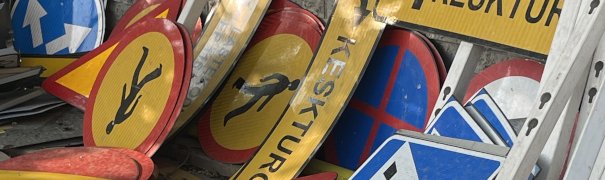
Market. After Keskturg, Tallinn’s central market, some 150 m to the east. Name used in three configurations: 1) tänav, whose residents were initially located by liival, kitsas tänavas, or ‘in a narrow street on the sand’, indicating the extent of Tallinn sands, here about 2 km from the shore, then by Salzmann-Dörptsche Straße (Saltzmann-Tartu road, 1825, after a local councillor), moving later to various herring-based names: Heringstraße (1865); Heeringi (1885); Heeringa (1908-1948) and even, at one stage, Подселедочная (Podseledochnaya, under the [sign of the] herring) which Kivi suggests was a herring store cum tavern. Turu is a loan word, ultimately from Old East Slavic *tъrgъ (tǔrgǔ) apparently via Russian (but hard to trace) to old Swedish, torgh>torg, and thence to Finnish tori and the Finnish town of Turku, the genitive of which is Turun (see Kauba). Anagram of Rutu. See also Turu põik and Turu plats.
Vähi (Vähk)
The noble, European or broad-fingered crayfish, Astacus astacus, aka jõevähk, harilik jõevähk, väärisvähk (vääris = noble, costly...), not a fish, a crustacean (English name derived from old French crevis [today écrevisse], becoming crevish then segueing into crayfish due to similarity of sound [ditto with American crawfish]), part of a fish group anyway, see also Ahvena. Or see Abara. Or even Edela, why not, go on, take a risk, live your life!
Väike Rannavärav (0)
Small/Lesser/Lower Coastal gate. First known as Veike Ranna värav (1885), followed by Kleine Strandpforte (1907) then Väike-Rannavärava tn (since they now call it a värav, gate, instead of a tänav, street, the dash disappears) until 1987. Oddly, no medieval street/road names are recorded. Southernmost of the two ‘Coastal gates’ (if there were only 2 of them, shouldn’t it be ‘southernmore’?) See Suur Rannavärav.