
Home
Tuulenurga (Tuulenurk)
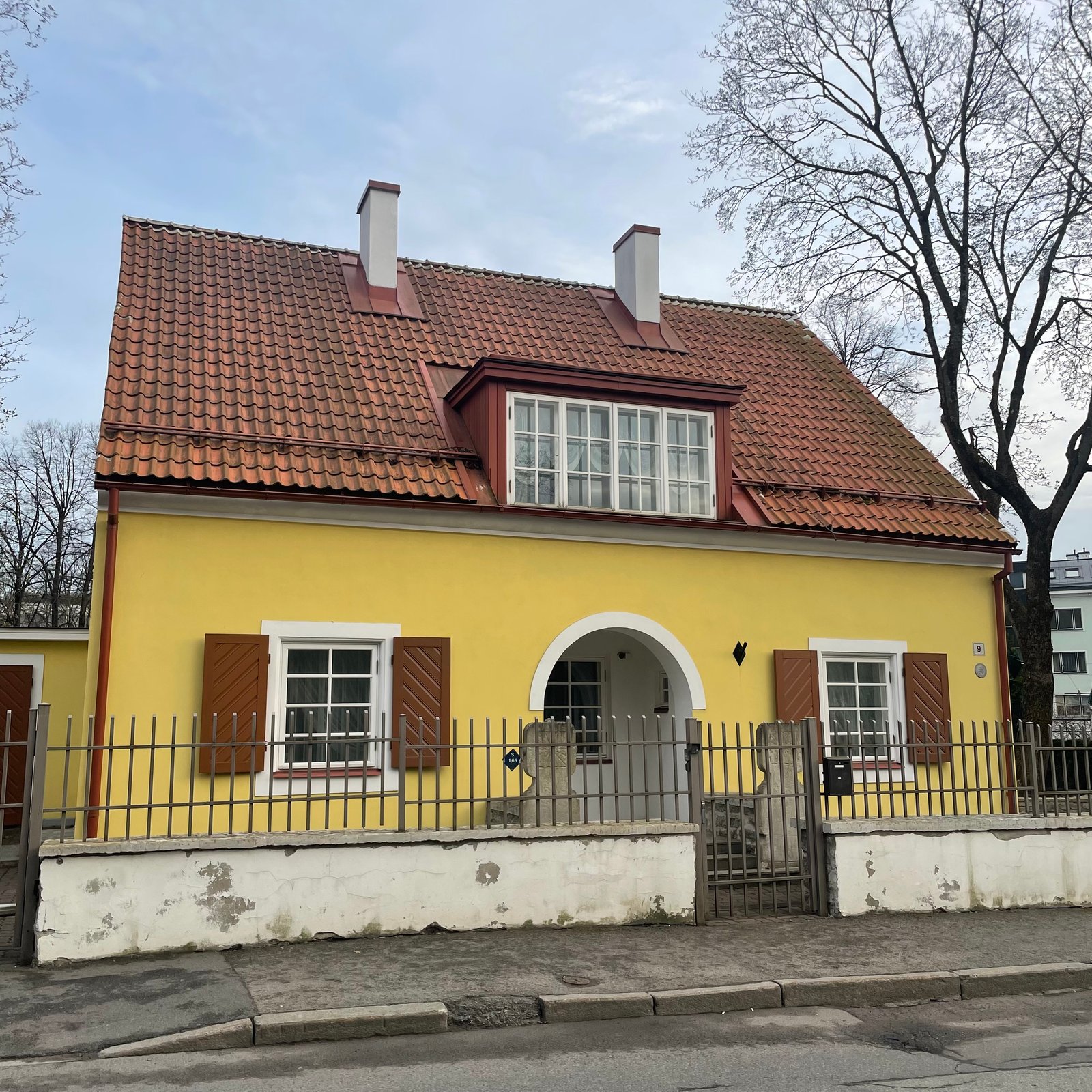
‘Windy corner’, athough the nurk:nurga ending could also refer to a paddock. Estification of the earlier ‘Windeck’ summer house, streetname replacing the western strip of Kose in (what seems to be called, perhaps informally) Windecki park, former poolmõis (see Mõisa) once known as Weissi. Should I dig deeper? No.
Udeselja (Udeselg)
Lit. downy-back, moths of the lutestring (nothing to do with lutes, but from lustrine, an old term for silk derived from Italian lustrino, a Genoa-made silk fabric, itself from Latin lustrare, to brighten or illumine) and related families:
- Ahhaat-udeselg, buff arches (lit. agate lutestring), Habrosyne pyritoides
- Hall-udeselg, poplar lutestring (lit. grey), Tethea or
- Kevad-udeselg, yellow horned (lit. spring [season]), Achlya flavicornis
- Silmik-udeselg, figure of eighty (lit. ‘eyed’, the 80 being the white markings on its forewings), T. ocularis
- Vaarika-udeselg, peach blossom (of course, see Vaarika…), Thyatira batis
All of which known to the local police. Part of a lepidopteran group. See also Uneliblika.
Vambola (Vambola)
Named after the mine-cruiser Vambola/Wambola, ex Soviet Spartak, ex Russian Kapitan 2, one of two Russian destroyers (sister ship/street Lennuk a block away) hijacked by the British and given to Estonia in 1919 (or maybe Dec 1918). Name almost certainly comes from the eponymous hero of Wambola: Jutustus wanast Eesti ajaloost (1209-1212), Vambola: A Story from Olde Estonian Historie (1209-1212) (1889, Publ. J. Solba), reviving interest in Lembit of Lehola, first tome of a trilogy including Aita (1891) and Leili (1892/93) by Saali A. Ship said to have been sold to Peru in 1933 and scrapped in 1954. It is not impossible that the similarly-sounding Varbola may have had played some initial influence in the name. Not to be confused with EML (Eesti Mereväe Laev, lit. Estonian Naval Ship) Wambola (M311), ex ‘Cuxhaven’ of German Navy, given to Estonia in 2003.